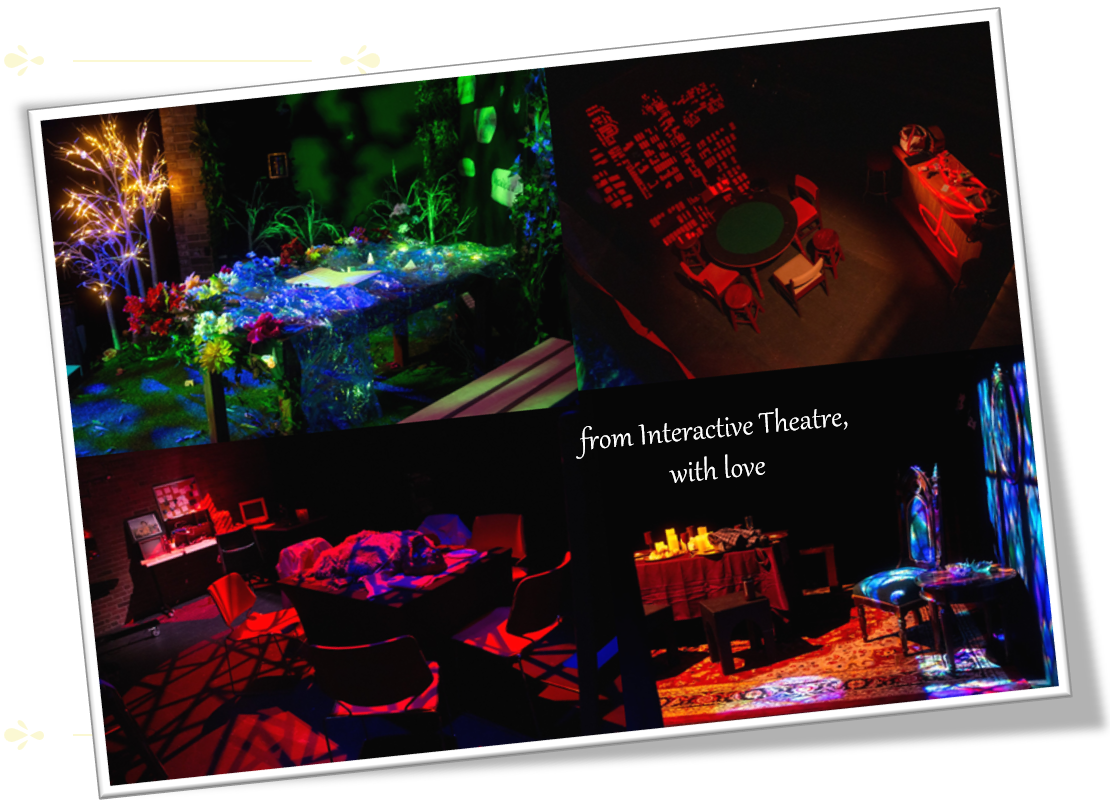
I have been crafting my own interactive performances since I was a child and through my love of live-action gaming, role-play, table top and video games, puzzles, play, and avatars, I have remained intricately involved in the world of immersive, emergent performance.
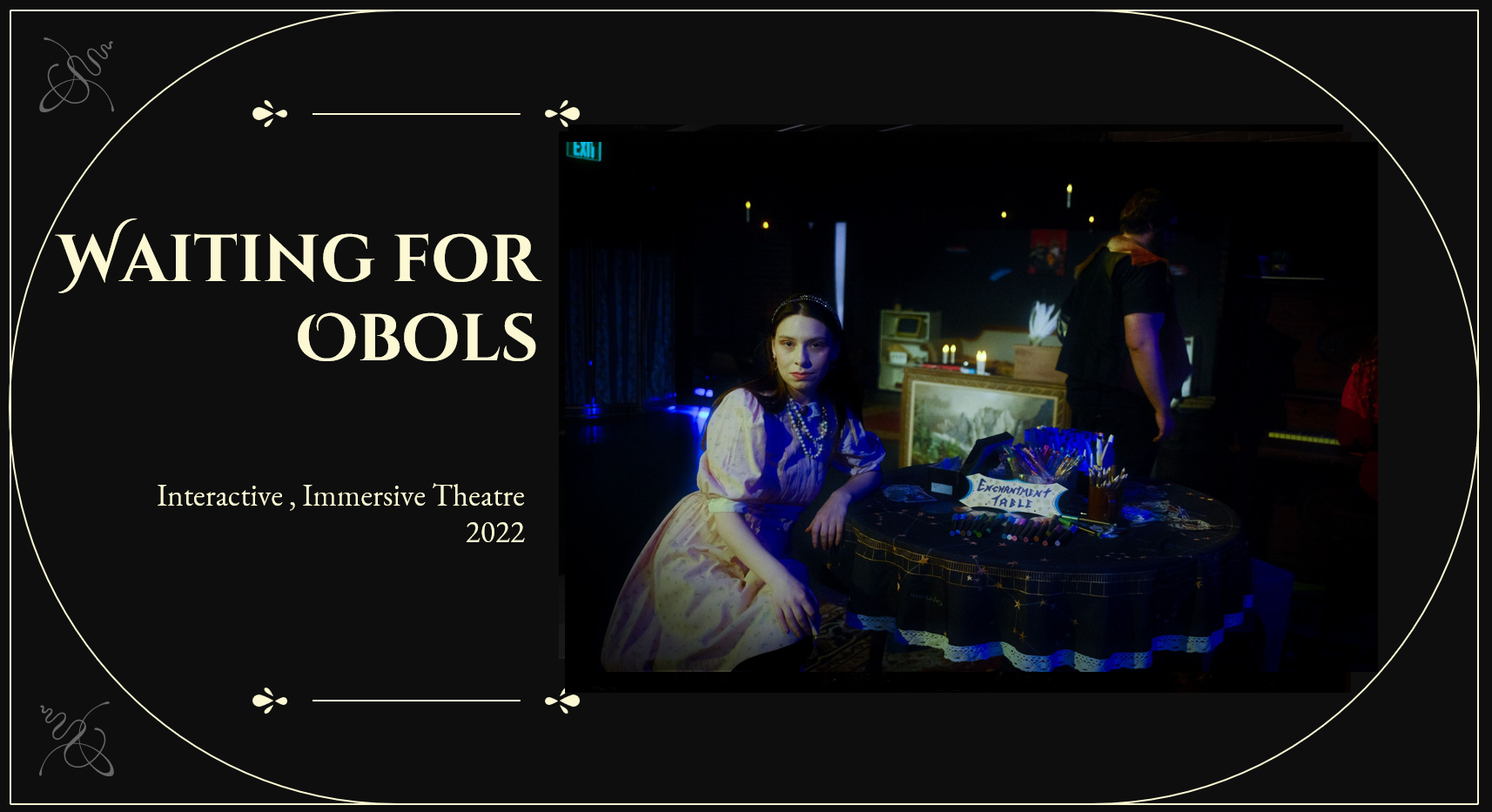
However, a very unique opportunity presented itself to me when I joined Clark University. During my first couple of weeks, while at a welcome event, my friend and peer, Ezra Cove (3D artist) introduced me to our new colleague, Jessie Darrell-Jarbadan (costume design) from the Theater department. We decided to gather, along with our friend/peer Amanda Theinert (psychology of games), for tea at my office and our shared love of performance, theater, and exciting technologies came together in the form of a collaborative proposal for a recently announced Innovation grant ($7,500) — an Interactive Theatre course! I wrote up the proposal, hedged my bets we’d make it happen one way or another, and started work on “Waiting for Obols.”
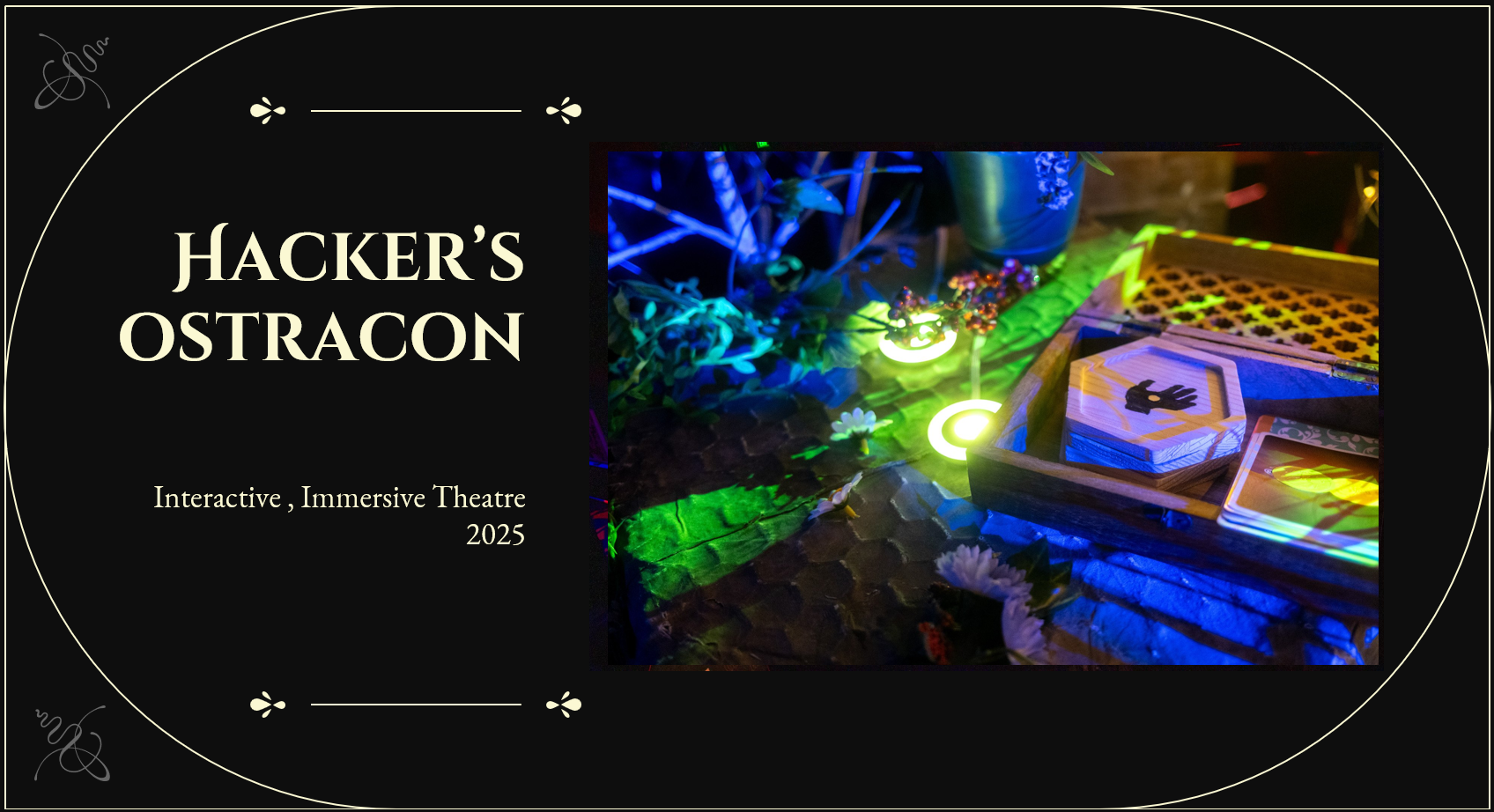
We did indeed get the grant, and the last three years of performances have been amazing! We are starting our fourth year, which will also showcase my fourth title, “Hacker’s Ostracon” — ever wonder what would happen in an alternate reality ’90s tech, seaside town populated with supernaturals who don’t know it yet? Throughout these years, I am proud that our original goals for the experience have proven valuable and achievable, and that so many students have been inspired by participating either through taking the course or attending the performances. Frequently, students take the course more than once, and often those attending a performance decide to take the course the following year! It’s difficult to express just how much I enjoy this experience of sharing my love of engaged performances along the historic timeline, helping students to build exciting and rich characters, encouraging clever world-building and interaction design, and inspiring intentional participant engagement, set design, and audioscape crafting.
I have the opportunity to discuss the early excitement of Greek, Roman, and Chinese theater, the push for a more reserved audience experience in the 19th and early 20th centuries, and then the return to calls to participation with movements like the Living Newspaper, Ayn Rand’s “Night of January 16th,” the Living Theater Company, and Theater of the Oppressed. When we reach more contemporary times, I love sharing my personal experiences at various performances — the experiences that have shaped me in exciting ways, like Sleep No More, the Architect’s Inn, the Alving Estate — and hearing what performances and/or games have shaped the students.
But the joy of character building, interaction design, and embodiment are always the most rewarding aspects — the parts where wonder and confidence and joy grow wild.
And of course I love prop, set, lighting, and audio design, as an interactive installation artist, with the most exciting part being the collaboration with other incredible artists that the opportunity affords! Working with Jessie and seeing her costume creation bring characters to life while inspiring life long passion for the art and craft in students who might not otherwise have ever touched a pattern or considered the artistry and theory, is so exciting! And working with Ezra as he effortlessly demonstrates and thoughtfully teaches the technological aspects of 3D fabric, models, and visualization is jaw-droppingly wonderful! And without Amanda, there would be no careful peeks into the motivation, documentation of the intricate relationships between characters and goals, no visionary design of lights and set and makeup spoken in a rich language of color and aura. And this last year, we had the added joy of working with lighting and projection genius, Matt Wasser.
I believe that the development process, research, and course guides, along with the four basic plays I have created, could make for a nice reference, and I have been working on putting it together with the hopes of offering a workshop for those new to but excited by exploring interactive theatre production with a foundation in game for their groups (friends, students, or community). For me, this year is a critical point, as it will touch on the four cornerstones of interactive performance that I hope to address:
year 1: collective engagement / group play
collection of experiences to build their personal tale
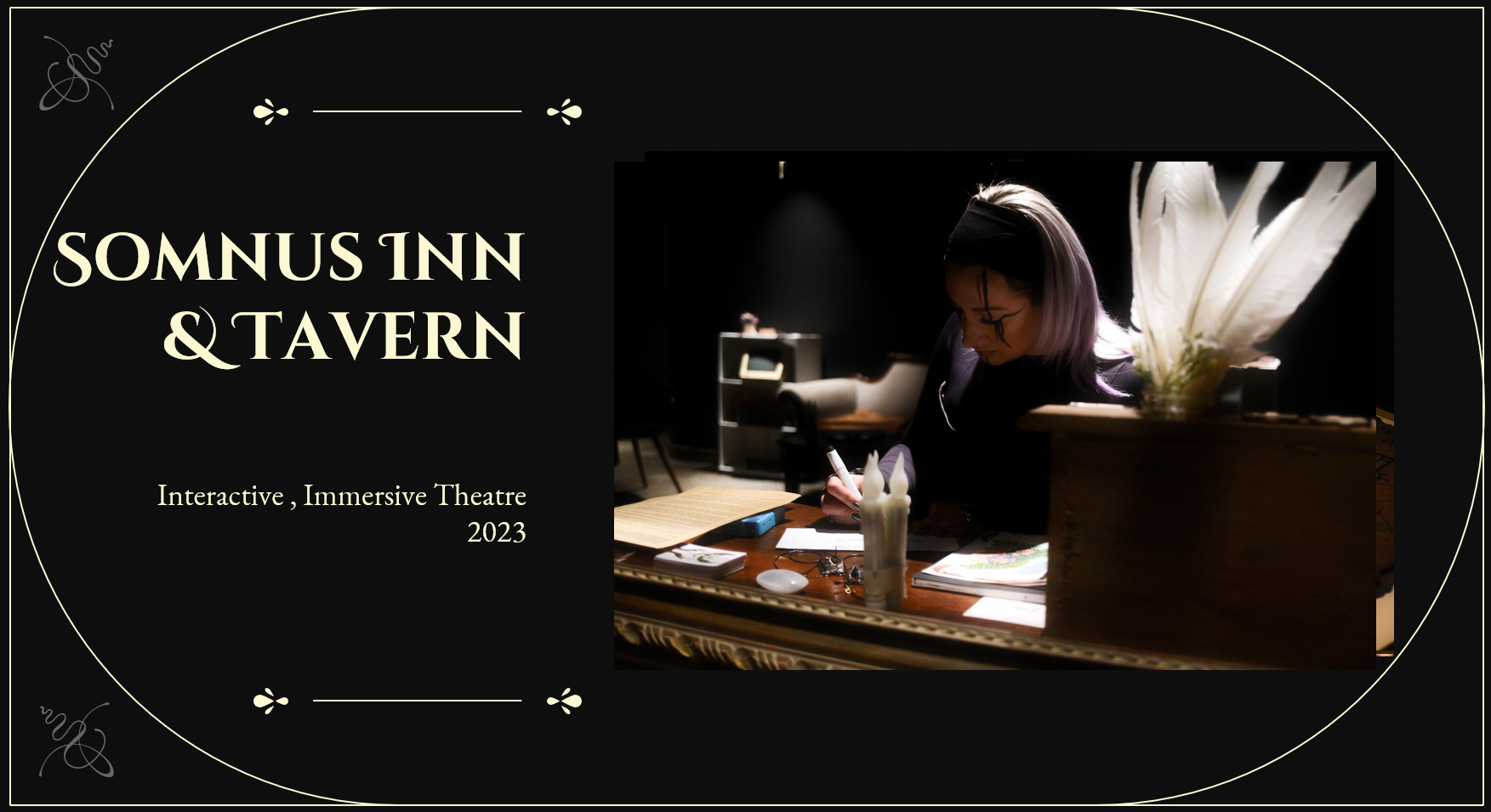
year 2: storytelling experiences / quests / multiple outcomes
working together for a goal, choice of control or flow, shared meaning
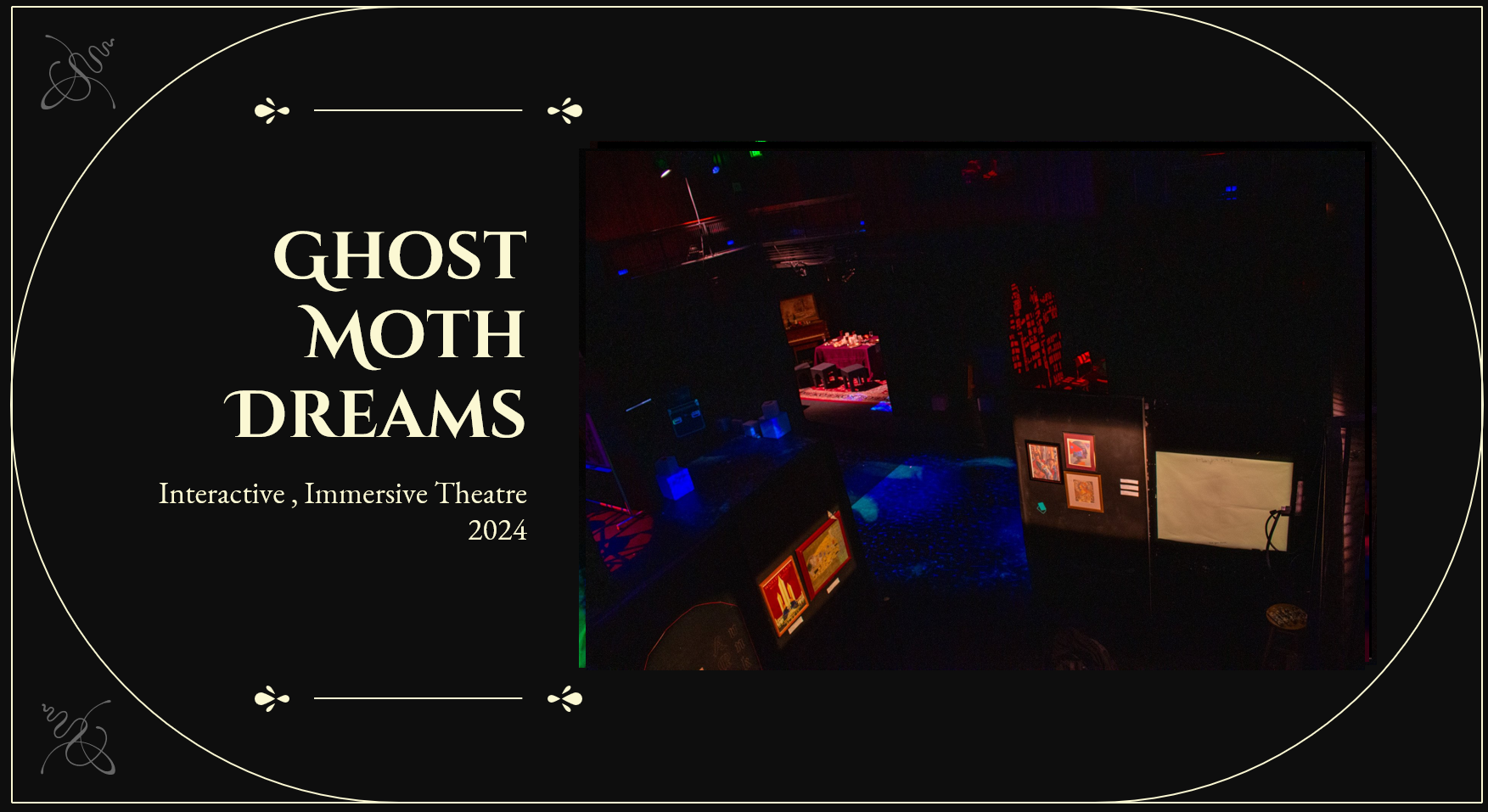
year 3: physical engagement / props, set as storytellers
follow rules or make your own, engage as play or game or both
year 4: roleplay / character embodiment / relationships
alliances (power/influence) and psychological engagement
Regardless, the experience has been life-orienting, and I am truly grateful as an artist to have had this opportunity to work in this way.